SECTION 1
What exactly is PCOS?
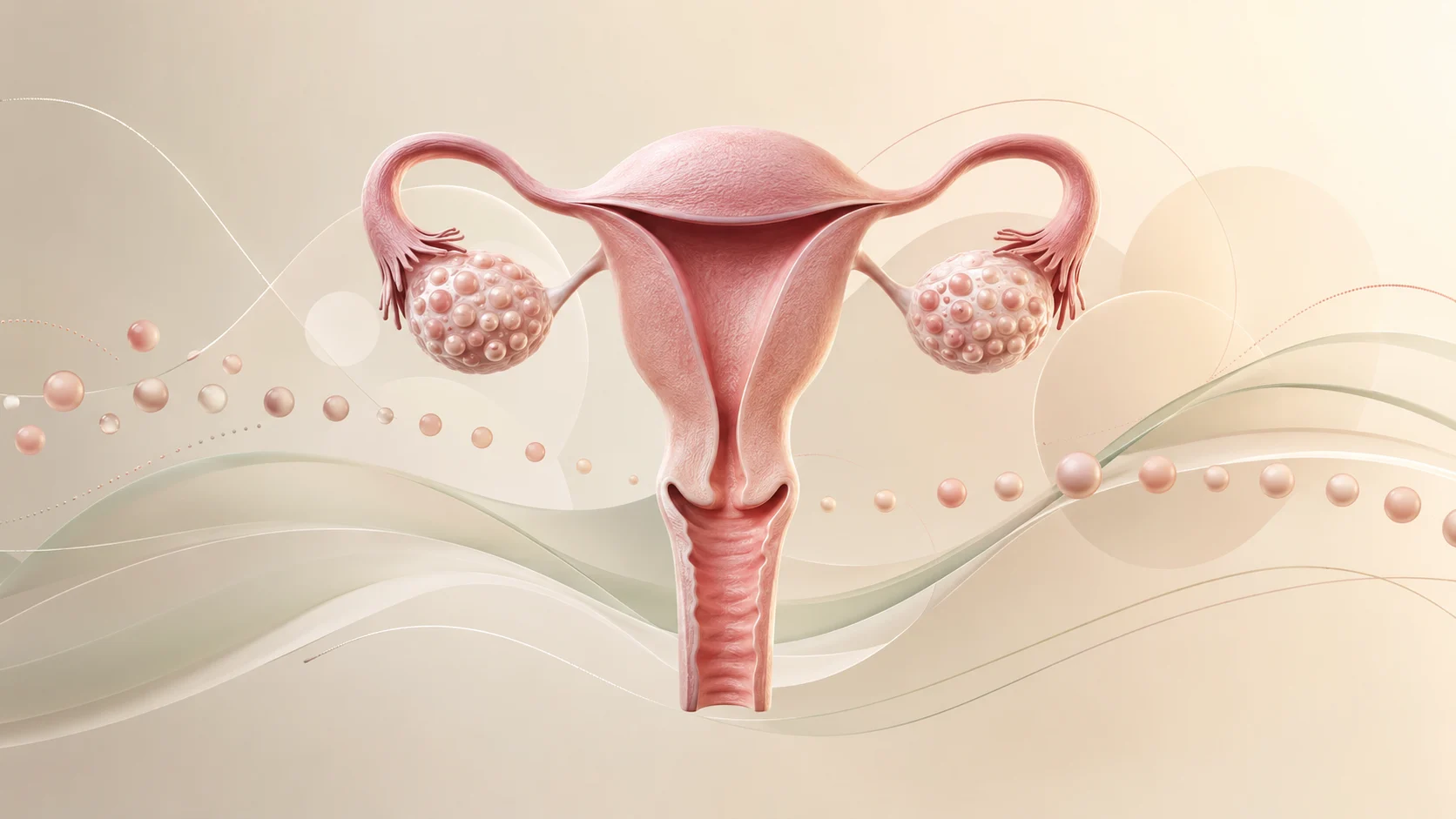
Polycystic ovary syndrome affects ovulation and hormone balance. Some women have irregular periods, increased androgen levels or polycystic-looking ovaries, but not everyone has the same combination of symptoms.
In simple terms: the ovaries and hormones are not following a predictable monthly rhythm.
SECTION 2
Why can symptoms be so different?
PCOS may affect menstrual cycles, skin, hair, weight, insulin response and fertility. Genetics, sleep, stress, activity and metabolic health can influence how strongly each symptom appears.
Two women with PCOS may need completely different treatment plans.
SECTION 3
What treatment can achieve
Treatment may regulate periods, reduce acne or unwanted hair, improve insulin sensitivity and support ovulation. The plan may include nutrition and activity changes, medicines, cycle regulation or fertility treatment when appropriate.
The goal is not merely a normal scan—it is better symptoms and better long-term health.
SECTION 4
Does weight gain always mean PCOS?
No. Weight changes can have several causes. Thyroid problems, medicines, sleep disturbance and other hormonal or lifestyle factors may contribute, so appropriate testing matters before blaming PCOS alone.
Correct diagnosis comes before treatment.
SECTION 5
Can women with PCOS become pregnant?
Yes. Many women with PCOS conceive naturally, while others benefit from cycle tracking, ovulation treatment or fertility support. Early assessment is useful when cycles are very irregular or pregnancy is taking longer than expected.
PCOS can delay ovulation, but it does not automatically mean infertility.
COMMON QUESTIONS
Questions patients often ask
Will PCOS disappear after marriage or pregnancy?
No. Marriage does not treat PCOS, and pregnancy does not guarantee it will disappear. Symptoms may change over time and still require follow-up.
Do I need medicine throughout my life?
Not necessarily. Treatment changes according to symptoms, age, health risks and pregnancy plans. Some women need intermittent treatment and monitoring rather than continuous medicine.
Should everyone with PCOS lose weight?
No. PCOS also affects women with a healthy or low body weight. Lifestyle advice and treatment must be individualised.
When should I consult a gynaecologist?
Seek advice for very irregular or absent periods, persistent acne or excess hair, pelvic symptoms, difficulty conceiving or concerns about diabetes and long-term health.